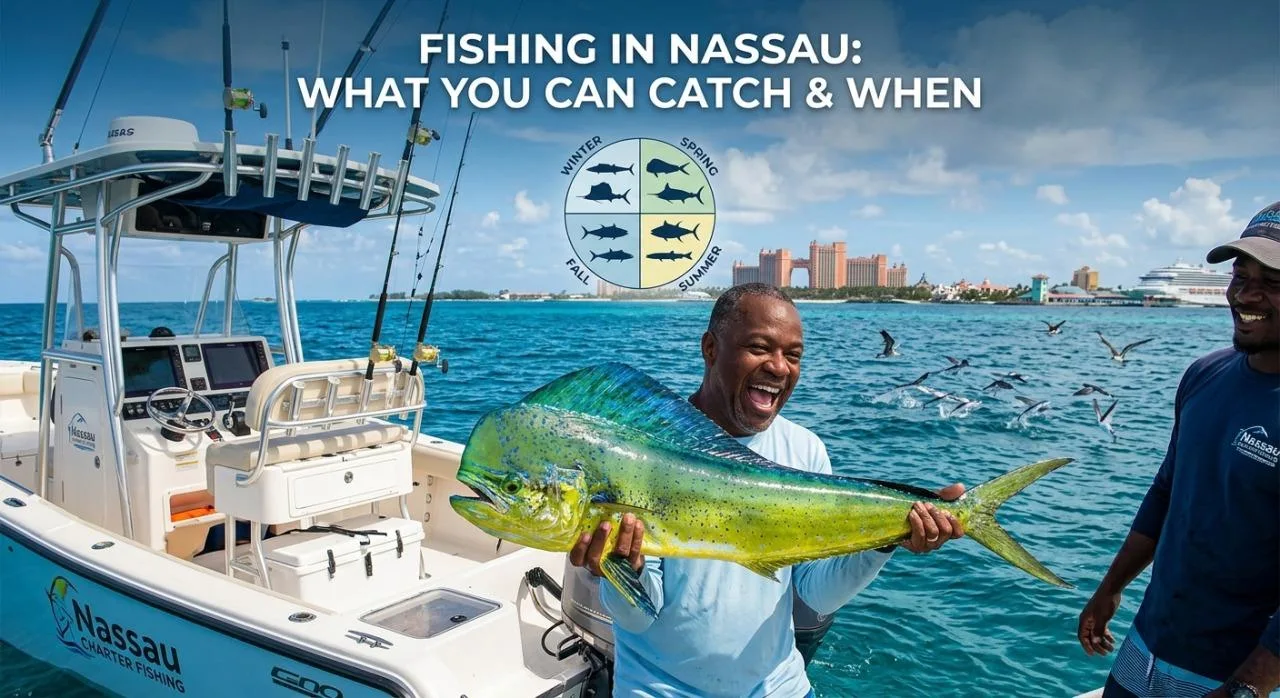
Located just miles from the massive oceanic drop-offs of the Tongue of the Ocean and surrounded by sprawling, crystal-clear shallow flats, New Providence Island stands as a premier angling destination in the Caribbean. The geography of the Bahamas offers a unique setup for sport fishing: shallow banks abruptly plunge into deep, nutrient-rich oceanic trenches within minutes of leaving the dock. This dramatic drop-off creates an ideal environment for pelagic predators while maintaining protected shallow ecosystems for technical sight-fishing.
Whether you are targeting high-speed pelagic strikes offshore, wading through tranquil white-sand flats for skittish gamefish, or dropping baits over coral reefs, booking a charter for fishing in nassau bahamas provides access to some of the most productive fishing grounds in the region. Understanding what species migrate through these waters, how local weather patterns shift feeding behavior, and when specific target fish reach their peak abundance ensures a successful charter experience.
What You Can Catch: Detailed Species Breakdown
Nassau offers three primary fishing disciplines: deep-sea offshore trolling, shallow flats fishing, and reef or wreck bottom-fishing. Each discipline requires distinct gear, tactics, and boat setups.
1. Offshore Pelagics (Deep-Sea Fishing)
The deep-sea action around Nassau revolves around the Tongue of the Ocean, a deep underwater trench separating New Providence from Andros Island. The trench acts as a highway for pelagic predators following migratory baitfish.
- Wahoo: Highly prized for their blistering speed and incredible culinary quality, wahoo are aggressive apex predators. Reaching speeds over 50 miles per hour, they strike high-speed trolling spreads along the edge of deep drop-offs, particularly around moon phases in the winter months.
- Mahi-Mahi (Dolphin / Dorado): Known for vibrant blue and gold colors and acrobatics, mahi-mahi travel in schools near floating Sargassum weed lines, tide rips, and oceanic debris. They offer fast-paced action and excellent table fare.
- Tuna (Yellowfin, Blackfin, and Skipjack): Yellowfin tuna represent the heavyweights of the tuna family in the Bahamas, often exceeding 50 to 80 pounds. Anglers look for diving seabirds or active bait busts offshore, using live-bait chumming or trolling techniques to hook these hard-fighting pelagics.
- Billfish (Blue Marlin, White Marlin, and Sailfish): Blue marlin are the undisputed kings of offshore sportfishing. The deep trenches surrounding New Providence hold massive billfish, with summer months yielding surface-smashing strikes on artificial lures and rigged natural baits.
2. Shallow Flats and Inshore Gamefish
The southern coast of New Providence, along with nearby uninhabited cays like Rose Island and Green Cay, features expansive sand flats, mangrove creeks, and turtle-grass beds.
- Bonefish (“The Grey Ghost”): Renowned for silver camouflage and explosive first runs, bonefish are the ultimate shallow-water test. Anglers hunt them by sight, casting small shrimp or crab flies, or using light spinning tackle with live shrimp.
- Permit and Tarpon: While less abundant than in Florida or Belize, permit and tarpon frequent deeper channels, flats, and marina basins around Nassau. Permit offer a technical challenge for advanced fly anglers, while juvenile tarpon provide thrilling topwater jumps.
- Barracuda: Often overlooked, great barracuda are aggressive sight-fishing targets on the flats. They strike fast-moving topwater lures with incredible speed and force, making them a fun option when bonefish feeding slows down during mid-day heat.
3. Reefs, Drop-Offs, and Deep Wrecks
For anglers seeking consistent action, non-stop bites, or fresh seafood for dinner, the reefs and wrecks surrounding New Providence deliver excellent bottom-fishing.
- Snapper (Mutton, Yellowtail, and Mangrove): Yellowtail snapper populate shallow coral heads, while mutton snapper cruise deeper sandy bottoms near reefs. Light tackle with fresh cut bait or live pilchards yields steady action.
- Grouper (Nassau, Black, and Gag): Grouper lie in wait near coral caverns and sunken shipwrecks. They require heavy bottom tackle to prevent them from diving back into sharp structure after taking a bait. (Note: Nassau grouper is protected under a strict closed spawning season from December 1 to February 28 to preserve regional stocks).
When to Fish: Seasonal Target Calendar
While resident species like bonefish, snapper, barracuda, and jacks can be caught year-round, migratory species move through Nassau on strict seasonal schedules tied to water temperature, wind patterns, and bait migrations.
|
Target Species |
Peak Season |
Secondary Window |
Recommended Technique |
|
Wahoo |
November – March |
October & April |
High-speed trolling (14–19 knots) along drop-off ledges |
|
Mahi-Mahi |
March – June |
September – November |
Trolling ballyhoo or plastic skirts near weed lines and debris |
|
Yellowfin & Blackfin Tuna |
May – August |
April & September |
Live-bait chumming, deep jigging, or trolling near birds |
|
Blue Marlin |
June – August |
May & September |
Heavy trolling with large artificial lures along deep trenches |
|
Sailfish |
December – April |
November & May |
Live-bait kite fishing or slow-trolling natural baits |
|
Bonefish |
October – April |
May – September |
Sight-casting small flies or live shrimp on shallow sand flats |
|
Grouper & Snapper |
Year-Round (Excluding closures) |
Year-Round |
Bottom-jigging or dropping live bait over reefs and shipwrecks |
Monthly Conditions and Annual Fishing Cycles
[ Nov – Feb: Winter Wahoo / Big Bonefish ] ──► [ Mar – May: Spring Mahi & Billfish ] ──► [ Jun – Aug: Summer Marlin & Tuna ]
Winter Season (December through February)
Winter brings cool-water currents down from the North Atlantic, pushing wahoo into the narrow drop-offs along the Tongue of the Ocean. High-speed trolling with heavy leads and dark-colored lures produces fast action. On the flats, winter winds can make sight-fishing challenging, but the bonefish that push onto the shallows during sunny windows tend to be larger, mature singles and pairs.
Spring Season (March through May)
Spring is widely considered the most versatile time of year for a mixed-bag trip. As water temperatures rise, massive schools of mahi-mahi move through the northeast Providence Channel. White marlin and sailfish show up in good numbers, and bonefish assemble in large, hungry schools across the flats, feeding aggressively before summer heat settles in.
Summer Season (June through August)
Calm seas and high temperatures define the summer months. This is the prime season for big-game offshore anglers targeting blue marlin, large yellowfin tuna, and deep-water broadbill swordfish. While mid-day heat can slow flats fishing, early morning and late afternoon tides yield excellent bonefish, permit, and tarpon action in shallow water.
Fall Season (September through November)
Fall marks a transition period with reduced boat traffic and shifting weather. As water temperatures drop from summer highs, bonefish feeding picks up dramatically across the southern banks. By late October and November, early-run wahoo begin trickling into the ledge, signaling the start of the winter offshore season.
Frequently Asked Questions (FAQs)
1. Do I need a sportsfishing license to fish in Nassau?
If you book a charter with a registered Bahamian captain, all necessary permits and licenses are included in the cost of your trip. If you bring a private vessel into Bahamian waters or plan to fish independently from shore or a rental boat, you must purchase a Bahamian Sportsfishing Permit at Customs upon entry.
2. What type of charter is best for families or beginners?
Half-day reef and wreck charters are ideal for families, casual anglers, or travelers prone to motion sickness. The boat stays on the leeward side of the island in protected, calm waters, run times to the fishing spots are under 20 minutes, and action for snapper and triggerfish is fast and continuous.
3. How does bonefishing around Nassau compare to the Outer Islands?
While Out Islands like Andros, Abaco, or Eleuthera are globally famous for sheer numbers of bonefish, Nassau offers solid flats fishing along its southern shore and nearby cays like Rose Island. It provides a great option for anglers who want to combine a dedicated morning of flats fishing with high-end resort amenities, dining, and nightlife.
4. Can I keep the fish I catch during my charter?
Yes, captains generally allow guests to keep legal-sized snapper, grouper, mahi-mahi, and wahoo within local bag limits. Many local harbor restaurants will cook your fresh catch for dinner. However, catch-and-release is strictly practiced for billfish, tarpon, and bonefish to protect local breeding populations.
Conclusion
From high-speed wahoo trolling during winter cold fronts to surface-smashing blue marlin strikes in the heat of July, New Providence offers year-round opportunities for every style of angler. By matching your travel dates with your preferred target species, selecting the right charter discipline, and preparing for local water conditions, you can enjoy a world-class sportfishing adventure in the Bahamas.