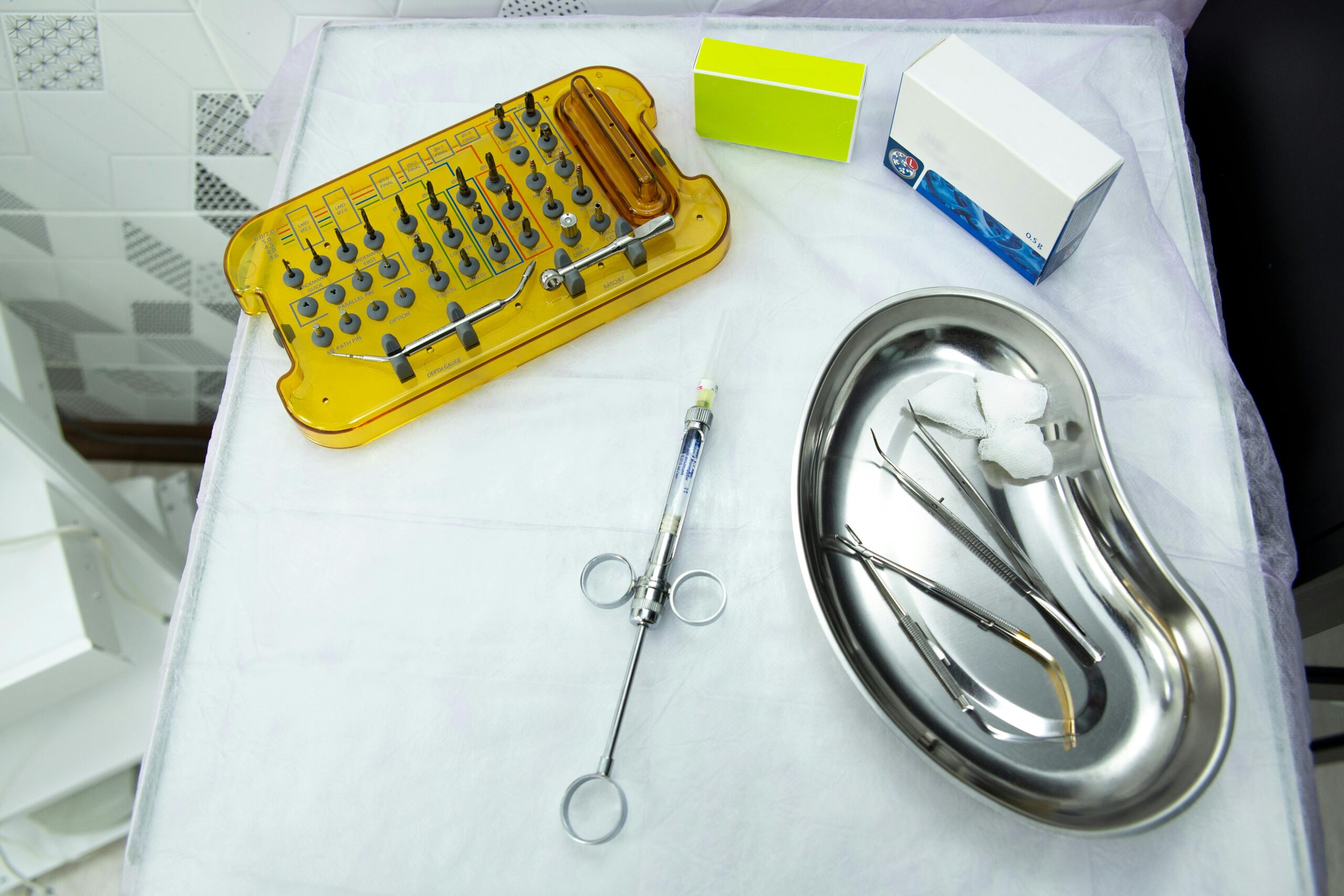
For people who have lost most or all of their teeth, dentures have been the standard answer for over a century. They work, more or less. But they also slip, click, require adhesives, and often make eating certain foods a chore. Most denture wearers eventually learn to live with these annoyances, because the alternatives used to be extensive surgery, long waits, and significant expense.
All-on-4 changes that equation. It is a technique that replaces a full arch of upper or lower teeth with just four dental implants supporting a fixed, non-removable set of teeth. For the right patients, it can transform how they eat, speak, and feel in a single surgical visit. It is not the right choice for everyone, but it has become one of the biggest advances in modern dentistry for patients dealing with tooth loss.
Here is a plain-language look at what All-on-4 actually is, who it works for, how the procedure unfolds, and what to expect for the rest of the life of the teeth.
What All-on-4 Actually Means
The name describes the technique. All of the teeth in an arch, which is one jaw, are supported by four dental implants. The implants are small titanium posts placed in the jawbone. They fuse with the bone over time and act as anchor points. A custom bridge of teeth is then attached to those implants, giving you a full, fixed set of teeth that feels and functions much like natural teeth.
The innovation is the number. Traditional full-arch implant solutions sometimes used six, eight, or more implants per arch. All-on-4 uses just four, with two of them placed at an angle to make the most of the available bone. This angled placement lets the implants take advantage of stronger, denser areas of the jaw and often eliminates the need for bone grafting.
Because only four implants are needed, the surgery is shorter, the recovery is faster, and the cost is lower than multi-implant approaches. It also means most patients can leave the office with a set of temporary teeth on the same day as the surgery, rather than wearing dentures while they heal.
Who Is a Good Candidate
All-on-4 is designed for people who have lost most or all of their teeth in one or both arches, or whose remaining teeth are failing and need to be removed. Common candidates include long-time denture wearers who are tired of the drawbacks, people with advanced gum disease who have lost most teeth to it, patients with severe decay across many teeth, and those who have been in a serious accident affecting their mouth.
Age is generally not a barrier. The practice has been performed successfully on patients in their 30s through their 90s. What matters more is overall health and the condition of the jawbone.
Good candidates generally have enough bone to anchor the implants, though the angled placement used in All-on-4 often allows treatment even for patients who have been told they need bone grafts for traditional implants. They should also be in reasonable overall health. Uncontrolled diabetes, active cancer treatment, and heavy smoking all make implant healing harder. Many of these factors can be managed, so even patients with health complications often qualify after some preparation.
How the Procedure Works
The treatment starts with a consultation and planning phase. Your dentist takes detailed 3D scans of your mouth and jaw, which let them see exactly where the bone is thickest and plan the position of each implant before surgery. Modern practices use computer-guided techniques to map the implant placement precisely.
If you still have some teeth in the arch being treated, those will usually be removed on the day of surgery, often right before the implants go in. This sounds intense, but most patients are sedated or under general anesthesia and feel nothing during the procedure.
The surgery itself usually takes a few hours. The dentist places the four implants in the planned positions, with two of them angled to maximize bone contact. A temporary set of fixed teeth is attached to the implants before you leave. These are not dentures. They are screwed in and stay in place. You walk out of the office with a full arch of teeth.
You will have some swelling and discomfort for a few days, similar to what follows a tooth extraction. Most patients manage with over-the-counter pain relievers and prescribed medications if needed. You will eat soft foods for several weeks while the implants integrate with the bone.
After three to six months, once the implants are fully fused to the bone, your dentist places the final set of teeth. These are custom-designed to look like natural teeth, and they are what you will have for the long term. Some practices use high-strength materials like zirconia for the final teeth, which look natural and last a long time.
What It Feels Like Day to Day
Patients who have lived with dentures and then switched to All-on-4 often describe the difference as life-changing. The teeth are fixed. They do not come out. You do not need adhesive. You do not have to avoid apples, corn on the cob, or a tough steak. You can laugh, speak, and kiss without worrying about your teeth shifting.
The teeth feel almost like natural teeth, with one major difference. Because the pressure is transferred through the implants into the jawbone, rather than spreading across the palate or lower gums like dentures, chewing feels much more natural and stable. The palate on the upper denture is gone, which also restores taste sensation that denture wearers lose.
You clean All-on-4 teeth by brushing like natural teeth, using a water flosser or small brushes to clean under the bridge, and going in for professional maintenance cleanings every three to six months. Your dentist will show you exactly how to care for them based on your specific setup.
Cost Compared to Alternatives
All-on-4 is not cheap. A full arch typically runs $20,000 to $30,000 per arch in North America, and sometimes more in high-end practices. A full-mouth restoration, meaning both upper and lower, is usually $40,000 to $60,000.
That sounds significant, and it is. But compared to the alternatives over time, it is often cost-effective. Traditional dentures run $1,500 to $4,000 up front but usually need to be relined or replaced every five to seven years. Implant-supported dentures with six or more implants per arch can cost $40,000 to $70,000 per arch. Individual implants for every missing tooth in a full mouth can exceed $80,000.
Most practices offer financing plans because the cost is typically outside what dental insurance covers. Some medical insurance may cover portions related to jaw surgery. It is worth asking about third-party health financing that spreads payments over two to five years at modest interest rates.
For a sense of how modern implant care is discussed and explained at a practice level, this dental implants clinic in London, Ontario gives a clear overview of what is involved with implant treatment, which is useful context whether you are considering single implants or a full-arch solution.
The Benefits People Care About Most
Beyond the technical advantages, the real benefits of All-on-4 are the ones that affect daily life. Patients consistently mention several things that matter most to them.
Eating is the big one. You can eat almost anything. Steak, apples, corn, nuts, salads, whatever you want. Food tastes better because the palate is not covered. Meals stop being something to manage and go back to being something to enjoy.
Speaking improves for people who had struggled with denture slippage or pronunciation. The teeth stay in place, so you can talk normally without worrying about a click or a wobble.
Self-confidence often sees a dramatic shift. People who had stopped smiling or avoided photos for years start doing both again. The teeth look natural, and knowing they are fixed in place removes the constant low-level worry that dentures create.
Bone loss slows. When teeth are missing, the jawbone that held them starts to shrink over time. Implants transfer chewing forces into the bone and help maintain its density and shape. Patients with long-standing tooth loss often see their face look fuller after All-on-4, because the bone stops shrinking and supports the face more fully.
Who Should Think Twice
All-on-4 is not for everyone. Patients with severe bone loss that cannot be worked around even with angled placement may need bone grafting first, or a different approach like zygomatic implants that anchor into the cheekbone. Patients with uncontrolled diabetes, active gum disease, heavy smoking habits, or certain autoimmune conditions may have lower success rates.
People with significant bite issues, severe grinding habits, or clenching may need extra planning to avoid putting too much force on the implants. A good surgeon will assess all of this during the consultation and flag any concerns before you commit.
Patients looking for a quick, non-surgical fix should also consider whether they are ready for implant surgery. The recovery is more involved than dentures, even though the outcome is better in most cases.
Finding the Right Dentist for the Job
All-on-4 is a skill-dependent procedure. The difference between a great result and a mediocre one is largely the surgeon’s experience. When evaluating a practice, ask how many All-on-4 cases they have done, what their success rate is, and to see before-and-after photos of actual patients. Look for a practice that uses 3D imaging, computer-guided surgery, and same-day temporary teeth as part of the standard workflow.
Some practices have an on-site surgeon who also handles the restoration work. Others coordinate between an oral surgeon or periodontist for the implant placement and a prosthodontist or general dentist for the final teeth. Either approach works as long as the team communicates well.
If you are in Chicago and want to explore dental implant options, the team at Bite Club takes time during consultations to walk through what implant treatment involves and whether a full-arch solution is appropriate, which matters because this is a decision you want to make with full information, not under time pressure.
What Happens If Something Goes Wrong
Implant failure is rare but possible. About 2 to 5 percent of implants fail to integrate with the bone or develop problems later. When this happens, the failed implant can usually be removed, the area allowed to heal, and a new implant placed.
The fixed bridge itself can chip or wear over time. High-quality materials like zirconia are very durable, but any restoration in the mouth handles thousands of pounds of cumulative chewing force per year. Most bridges are designed to be repairable or replaceable if something happens.
Regular maintenance visits catch small issues before they become big ones. Going to your cleanings every three to six months is important for the long-term success of any implant work.
The Bottom Line
All-on-4 is one of the biggest changes in modern dentistry for patients with full or near-full tooth loss. In a single day of surgery, patients go from failing teeth or dentures to a fixed, stable set of teeth that looks natural, functions like natural teeth, and usually lasts for decades.
It is not cheap, and it is not right for everyone. But for the people it fits, it is often life-changing. If you or someone you care about is struggling with dentures, losing teeth to gum disease, or facing the prospect of multiple extractions, a consultation with a dentist experienced in full-arch implants is worth your time. Knowing the option exists, and whether you qualify, can open up possibilities you did not know you had.